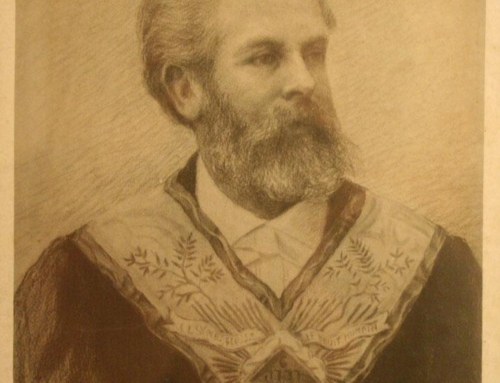
June offers a powerful moment to reflect on Audie Murphy, one of the most extraordinary Americans of the twentieth century. Born on June 20, 1925, in Kingston, Texas, Murphy became the most decorated American combat soldier of World War II, receiving every major combat valor award available to him, including the Medal of Honor. After the war, he went on to work as a successful actor and songwriter. He was raised a Master Mason in North Hollywood Lodge No. 542 on June 27, 1955, and later became a 32nd Degree Scottish Rite Mason. His life remains a striking example of bravery, discipline, and resilience.
Murphy’s wartime record is nearly unmatched in American military history. He served with remarkable courage under fire, repeatedly placing himself in danger to protect others and accomplish the mission. What makes his story so compelling is not only his battlefield heroism, but also the humility and pain that often accompanied it. He carried the burdens of war long after the fighting stopped. In that sense, his life reflects the heavy cost that often follows great courage. He was not merely decorated; he was tested.
After the war, Murphy successfully transitioned to life in Hollywood, where he acted in films and even wrote songs. That shift from soldier to public figure required another kind of strength: adaptability, restraint, and the ability to rebuild a life after trauma. Many know him for heroism in uniform, but his postwar life also showed perseverance and personal discipline. He did not allow the end of war to define the end of his usefulness.
Murphy’s Masonic life adds another layer to his legacy. His membership in the Craft connected his public service to a broader moral tradition of self-improvement, brotherhood, and honorable conduct. Masonry has long honored men who demonstrate courage, but not mere physical courage alone. It also honors moral courage, the ability to carry burdens, maintain principle, and serve faithfully in peace as well as in conflict. Murphy’s life speaks to both forms.
For the modern Mason, Audie Murphy offers several lessons. First, courage is not the absence of fear but the decision to act rightly in spite of it. Second, a man’s greatest battles are not always fought in public. Many Brothers carry invisible wounds, and strength often looks like perseverance rather than spectacle. Third, honor is proven by how a man handles both victory and suffering. Murphy’s life shows that character matters just as much after the battle as during it.
His example also reminds us that every worthy calling requires discipline. A Mason must be able to stand firm in hard conditions, adapt with wisdom, and continue serving when life becomes complicated. Murphy’s story is especially meaningful because it combines heroism, humility, and the struggle to live well after extraordinary events. That balance is rare, and it deserves reflection.
As you remember Audie Murphy this June, consider what it means to live bravely, work faithfully, and carry yourself with integrity in every season of life. A Brother should be ready not only to endure hardship, but to rise above it with honor.
Brother, be courageous in duty, steadfast in adversity, and humble in victory. Let your life show that true honor is not only won in battle, but kept through discipline, service, and faithfulness to what is right.